
Steel plate pretreatment production line
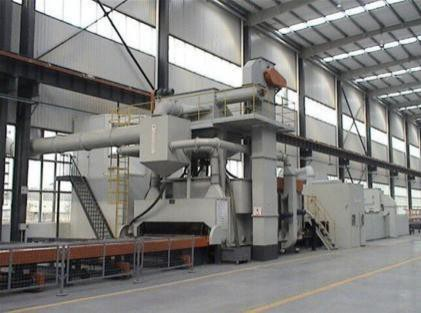
The steel plate pretreatment production line is an automated equipment line designed for surface cleaning, rust removal, rust prevention, and surface strengthening of steel materials.
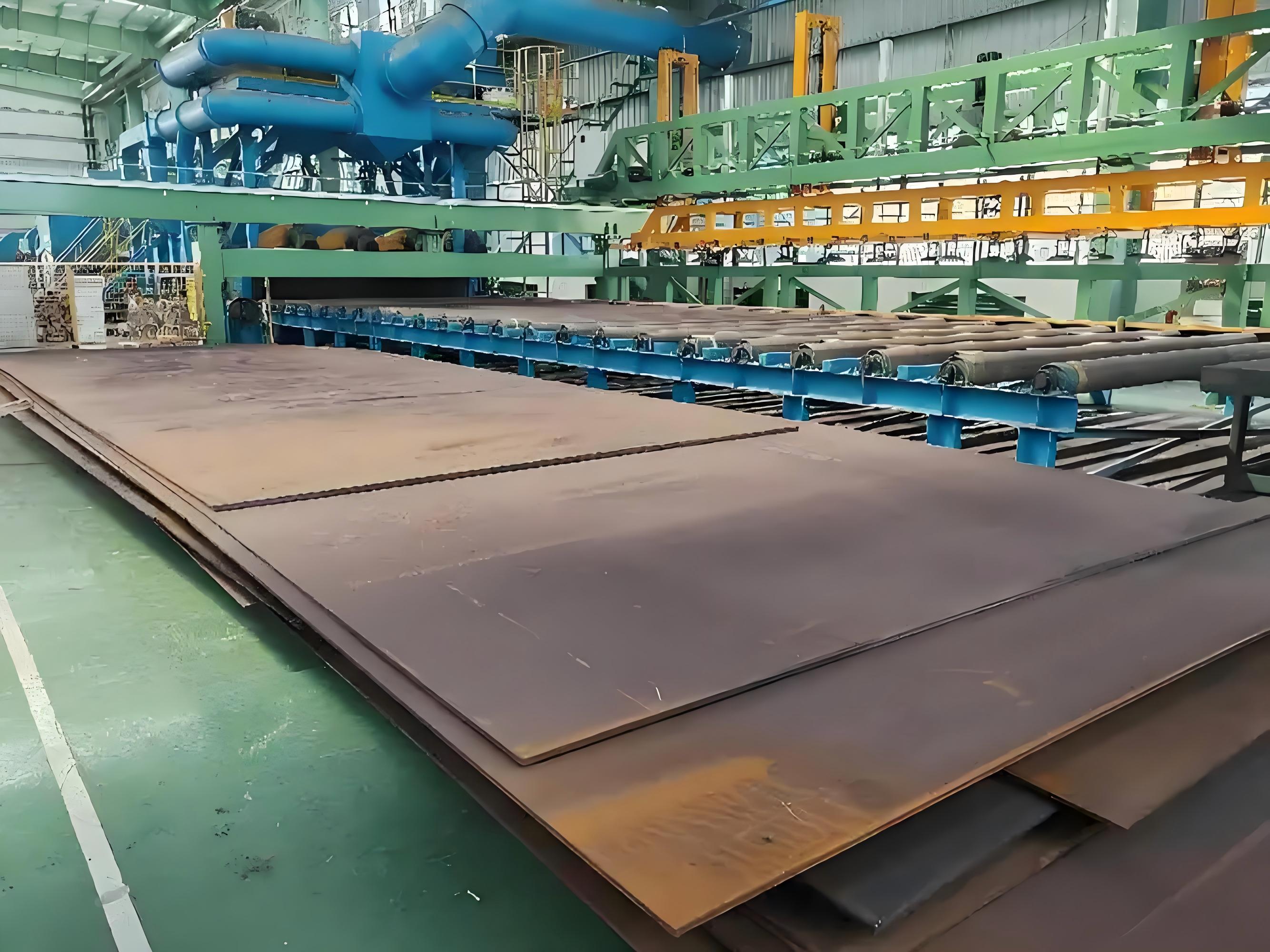
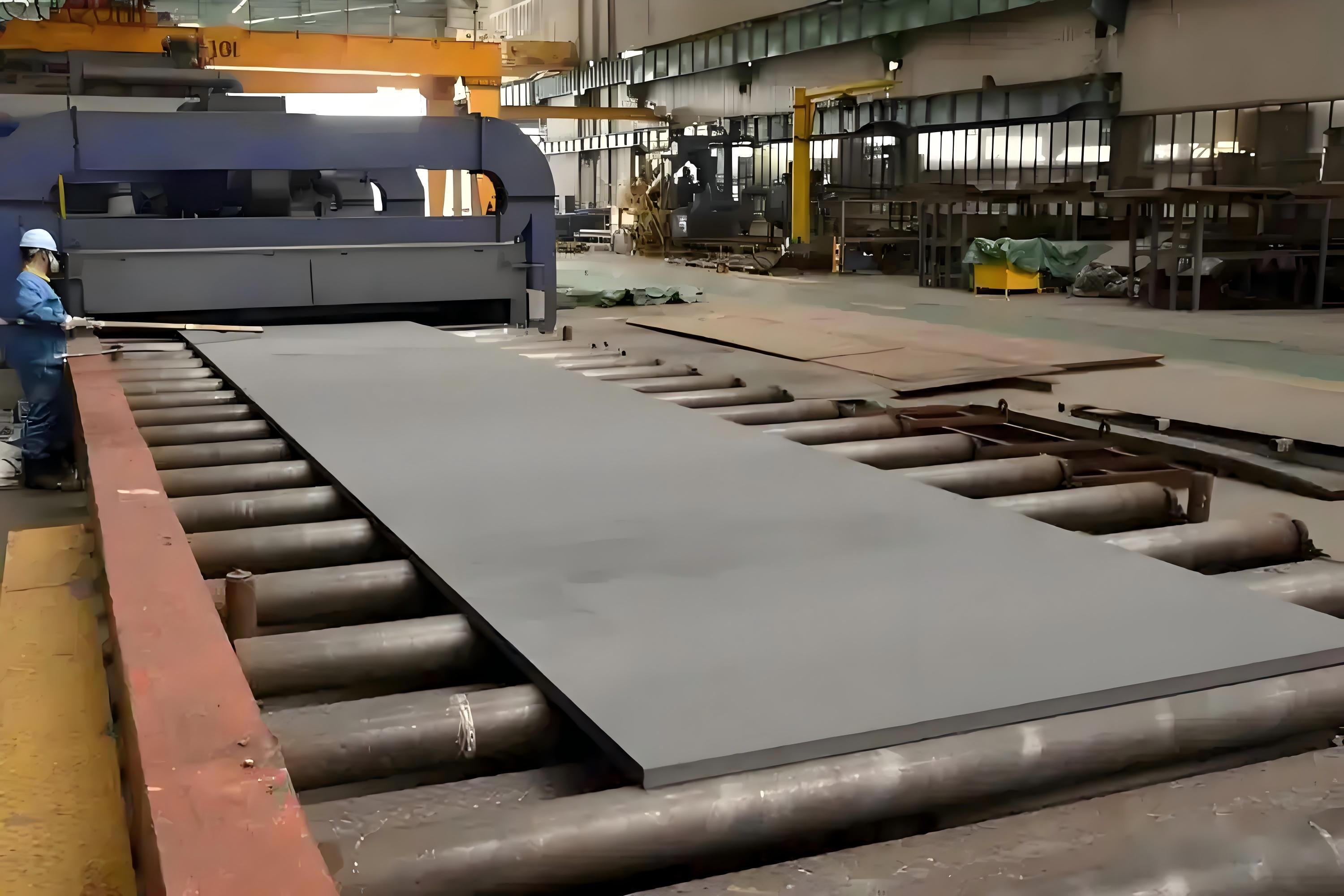
Steel materials are conveyed into the processing line via roller tables and then enter the shot blasting cleaning chamber, where rust and contaminants on the steel surface are treated. After blowing off the accumulated shot and floating dust, the steel moves into the painting chamber to complete the painting process. Subsequently, it passes through a drying chamber, where the paint film on the steel surface is dried to a "tack-free" or "hard-dry" state. Finally, the steel is delivered out via the output roller tables. This equipment line is made of high-quality materials and possesses excellent wear resistance.
Performance Indicators
The overall indicators present three-dimensional advantages:
◆Steel Plate Conveying Speed: 1.5~5.0 m/min (stepless speed regulation available, adaptable to steel plates of different thicknesses). Among them, the processing speed for thin steel plates (3~12 mm) is ≥ 3.0 m/min, and the processing speed for thick steel plates (12~50 mm) is ≥ 1.5 m/min;
◆Steel Plate Adaptation Range: Width 1.2~3.2 m (can be customized to expand to 4.0 m), Length 6~18 m (supports segmented continuous processing of extra-long steel plates);
◆Rust Removal Grade: ≥ GB8923-88 Sa2.5 (corresponding to international standard ISO 8501-1:2007 Sa2.5). The residual amount of scale and rust on the steel surface is ≤ 3%, and there shall be no visible oil or dirt;
◆Coating Quality:Shop Primer (Epoxy Zinc-Rich Primer): The uniformity of dry film thickness is 20~35 μm (with a thickness difference on the same plate ≤ 5 μm);Coating Adhesion: ≥ 5 MPa (tested by the cross-cut method, in compliance with GB/T 9286-1998);
◆Operational Stability: Monthly average unplanned downtime rate ≤ 0.5% (converted to monthly downtime ≤ 3.6 hours);Core Component Service Life: Shot blaster impellers ≥ 2,000 hours, coating system nozzles ≥ 1,500 hours;